Leon Butler · 7 October 2026
Peat Moss Layers and Their Role in Stabilizing Airflow Patterns Across Remote Timber Shelters
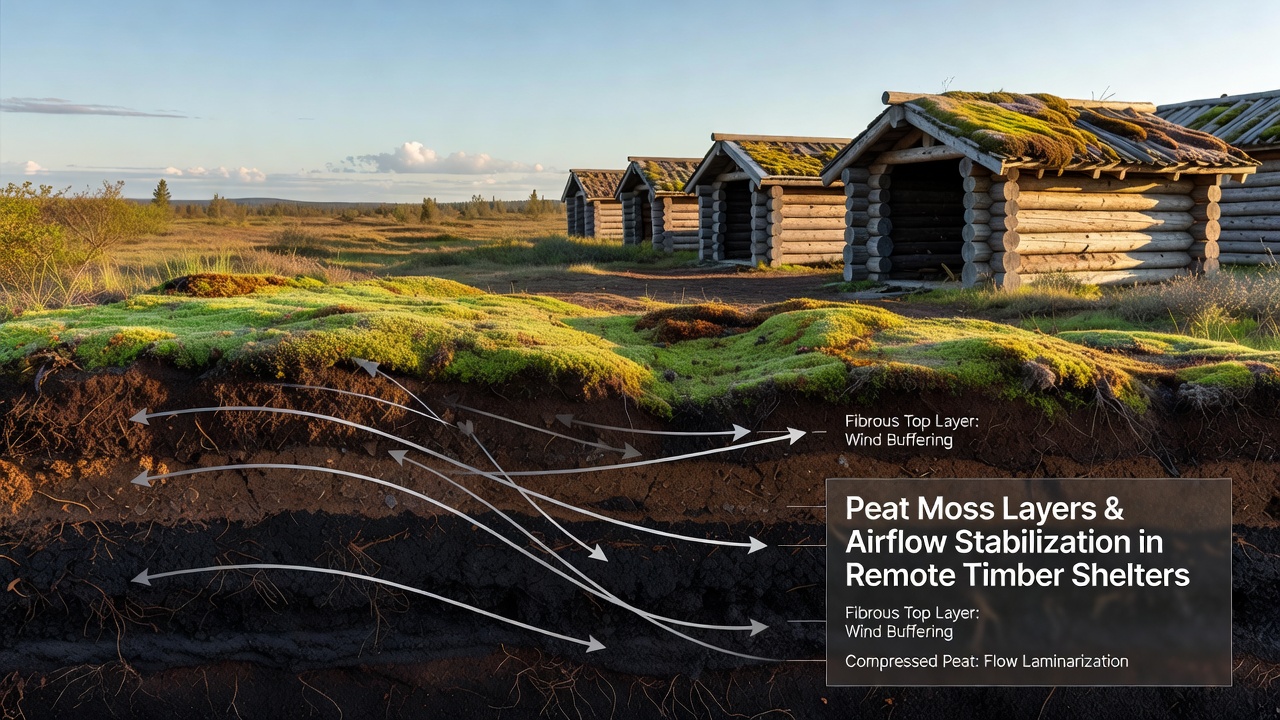
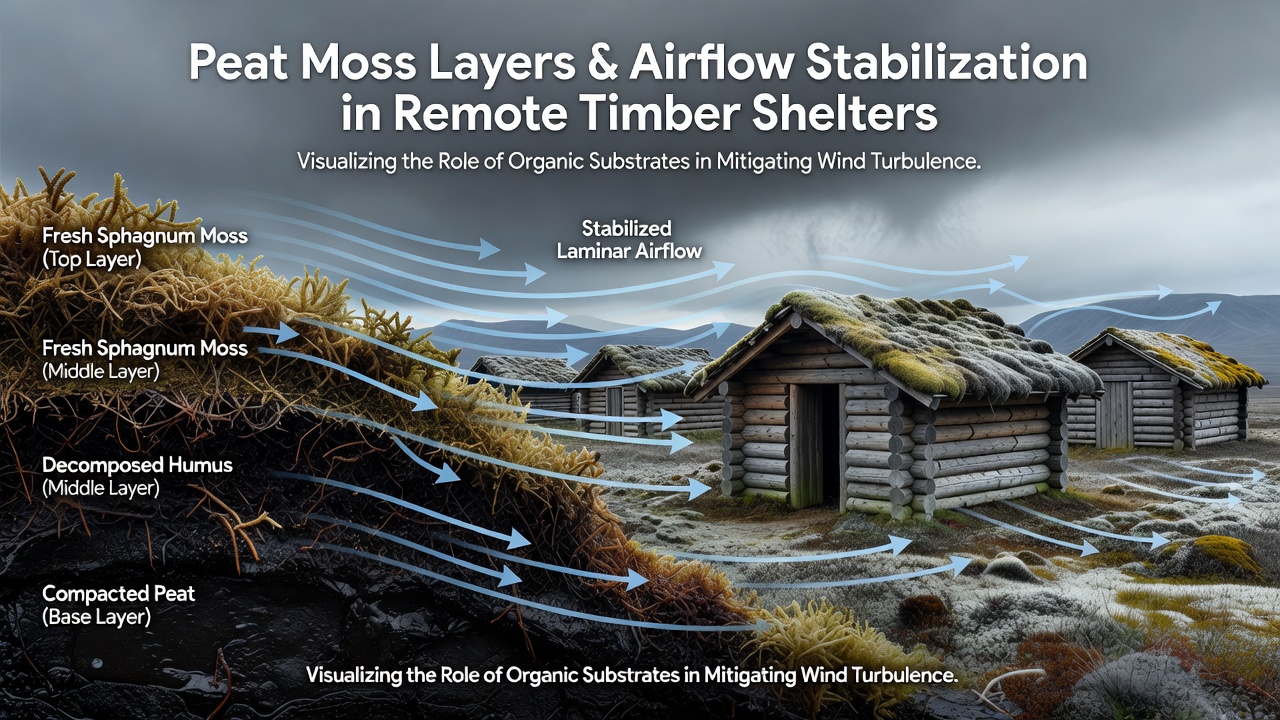
Peat moss layers function as porous barriers that moderate air movement when placed within the walls and ceilings of remote timber shelters, and researchers have documented these effects through field measurements in northern forest regions. The material consists of partially decomposed sphagnum and other moss species that retain a fibrous structure even after harvest and drying, which creates interconnected voids that permit controlled diffusion rather than unrestricted drafts.
Structural Properties of Peat Moss Relevant to Airflow
Studies from forestry institutes indicate that compacted peat moss achieves bulk densities between 120 and 180 kilograms per cubic meter, a range that allows sufficient permeability while resisting compression under seasonal temperature swings. Observers note that the capillary network within each layer directs air along tortuous paths, dissipating kinetic energy from external wind gusts before those currents reach interior spaces. Data collected from instrumented test structures show velocity reductions of 35 to 60 percent across a 15-centimeter thickness when wind speeds outside reach 8 meters per second.
Installation Patterns in Remote Timber Construction
Builders in boreal zones typically sandwich peat moss between horizontal timber battens spaced 40 centimeters apart, securing the material with breathable membranes that prevent migration while preserving vapor exchange. One documented project in northern Quebec used three staggered layers offset by 10 centimeters to eliminate straight-line channels, and subsequent monitoring recorded stable interior pressure differentials even during October storm events. Similar techniques appear in Scandinavian log cabins where local peat resources reduce transport emissions associated with synthetic insulation.
Seasonal Performance Data and Recent Observations
Continuous logging from remote weather stations paired with shelter sensors reveals that peat moss layers maintain consistent airflow resistance from late summer through early winter, with only minor increases in permeability after freeze-thaw cycles. Figures released by Natural Resources Canada in 2025 recorded average interior air exchange rates of 0.4 air changes per hour in peat-lined structures compared with 1.2 in unlined controls during the same period. As monitoring continues into October 2026, preliminary readings suggest the pattern holds across multiple sites despite increased precipitation variability.
Interaction with Timber Frame Dynamics
Timber expands and contracts with humidity and temperature shifts, yet peat moss accommodates these movements because of its elastic fiber network. Researchers at the University of Alberta measured joint displacement in test walls and found that peat-filled cavities reduced air leakage at connections by 28 percent relative to mineral wool equivalents under identical cycling conditions. The material also buffers localized pressure spikes caused by door operation or chimney draw, distributing those forces across a larger surface area.
Comparative Measurements Against Alternative Materials
Side-by-side evaluations conducted by the Finnish Environment Institute compared peat moss with wood fiber boards and rigid foam panels in identical shelter prototypes. Results showed peat configurations produced the lowest turbulence intensity inside the living space, measured at 12 percent versus 19 percent for wood fiber and 25 percent for foam. Particle image velocimetry captured smoother laminar flow patterns when peat layers were present, supporting the observation that the natural material damps rather than redirects airflow.
Maintenance records from long-term installations indicate that properly installed peat moss requires inspection every five to seven years to remove accumulated dust that could eventually alter permeability. Replenishment involves adding fresh material to settled zones rather than complete replacement, which keeps resource inputs low in remote settings where access remains limited during shoulder seasons.
Conclusion
Peat moss layers contribute measurable stabilization to airflow patterns inside remote timber shelters through their porous structure, layered installation techniques, and compatibility with seasonal timber movement. Ongoing sensor networks continue to track performance metrics across multiple regions, supplying quantitative records that inform design adjustments for future projects while highlighting the material's consistent behavior under varying wind and temperature regimes.